

A plain wall is a missed opportunity. That’s not a dramatic statement — it’s something interior designers have known for decades, and something homeowners are increasingly discovering for themselves. Wall paneling has moved from period-appropriate detail in Victorian townhouses to one of the most versatile and widely used design tools in contemporary homes, and the reasons are easy to understand once you see what it can do to a room.
The surge in interest around wall paneling ideas isn’t just a social media trend. It reflects a genuine shift in how people think about their living spaces — not just as functional containers, but as environments that should feel considered, personal, and visually interesting. A well-paneled wall adds depth, texture, and architectural character that paint alone simply can’t deliver.
Whether you’re planning a full renovation or looking for a weekend project that makes a real difference, understanding your options is the essential first step. From classic wainscoting to sleek contemporary grid panels, the range of styles, materials, and applications is broader than most people realize. This guide covers everything you need to make a confident, informed decision.
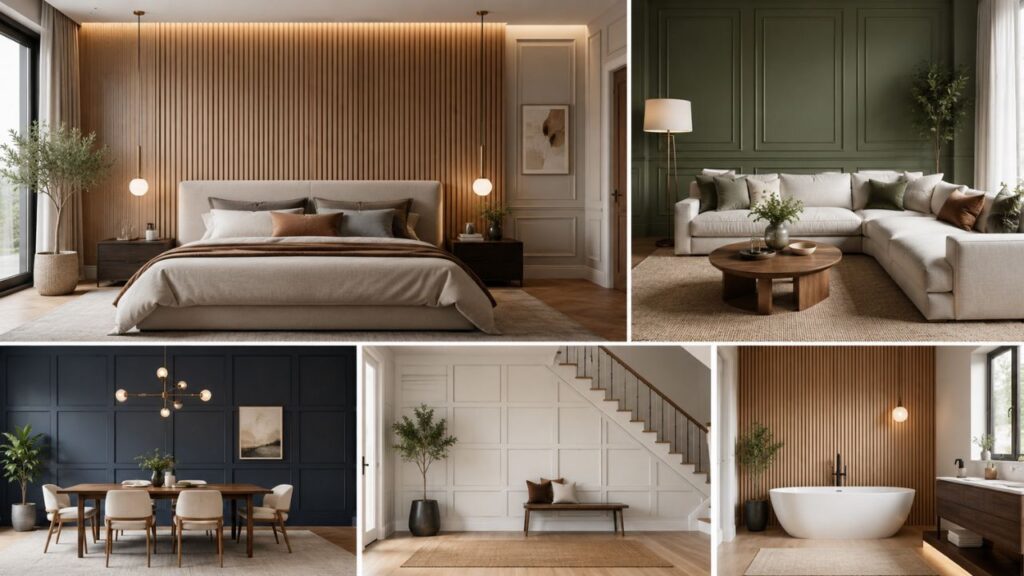
Why Wall Paneling Has Become So Popular Again
There’s a certain irony in the fact that wall paneling — a feature associated with everything from Tudor great halls to 1970s wood-paneled basements — has become one of the most requested elements in modern interior design. But the revival makes complete sense when you look at what contemporary paneling actually offers.
The key shift is in how paneling is being used. Rather than covering entire rooms floor to ceiling in dark timber, today’s approach tends to be more selective and more sophisticated. A single paneled feature wall in a bedroom, a half wall treatment in a hallway, or a geometric grid pattern in a living room — these applications use paneling as an accent rather than an all-encompassing treatment.
The Practical Case for Paneling
Beyond aesthetics, wall panelling ideas often serve practical purposes that make them doubly worthwhile. Paneling can conceal uneven plaster, hide cables and pipes, add a layer of insulation, and protect high-traffic walls from scuffs and damage. In rental properties, removable panel systems offer a way to add character without permanent alteration.
The durability argument is particularly compelling. A well-installed panelling wall in a hallway or staircase will outlast multiple paint jobs and continue looking intentional rather than worn. That long-term value is part of why more homeowners are treating paneling as an investment rather than a decorative indulgence.
Understanding the Main Types of Wall Paneling
Before you commit to a style, it helps to understand the main categories of wall panel treatments available. Each has a distinct visual character, a different installation approach, and a different price point.
Shaker and Grid Paneling
Shaker-style paneling uses simple rectangular frames applied to the wall surface to create a grid of raised or recessed panels. It’s one of the most popular wall paneling ideas currently, and for good reason — it works across a wide range of interior styles, from traditional to contemporary, and it’s relatively straightforward to install.
The grid pattern creates visual rhythm without being busy. In a neutral color, it reads as quietly sophisticated. In a bold color — deep navy, forest green, or charcoal — it becomes a genuine statement. The flexibility of this style is a large part of its enduring appeal.
Tongue and Groove Paneling
Tongue and groove involves interlocking vertical or horizontal boards that fit together seamlessly. It’s the classic choice for cottage, Scandi, and coastal interiors, and it creates a warm, textured surface that feels both traditional and fresh when painted in contemporary colors.
Vertical tongue and groove draws the eye upward and makes ceilings feel higher. Horizontal installation creates a more relaxed, beachy quality. The direction you choose should respond to the proportions of the room and the effect you’re trying to achieve.
Fluted and Ribbed Panels
Fluted paneling — characterized by vertical channels or ridges — has become one of the defining looks of contemporary interior design. It adds tactile depth and a sculptural quality that flat surfaces can’t replicate. You’ll find it used extensively in high-end residential projects and boutique hospitality spaces.
As a wall panel choice, fluted MDF or timber creates a strong visual impact even in small doses. A single fluted panel behind a bed or sofa can anchor the entire room without overwhelming it.
Wainscoting and Dado Rail Treatments
Wainscoting refers to paneling that covers the lower portion of a wall — typically from the floor to about one-third of the wall height — with a dado rail (a horizontal molding) marking the transition to the upper wall. This is one of the oldest and most architecturally established forms of wall paneling, with roots in Georgian and Victorian interior design.
Modern interpretations of wainscoting tend to be cleaner and less ornate than their historical counterparts, making them compatible with contemporary interiors while still adding genuine architectural character.
Wall Paneling Ideas for the Living Room
The living room is where most people start when they’re considering paneling, and it’s easy to see why. It’s the room that guests see first, the space where you spend the most time, and the area where a design investment pays the most visible dividends.
Living room modern wall panelling tends to favor clean lines, geometric precision, and a restrained color palette. The goal is usually to create a feature wall that anchors the room — typically behind the sofa or the television — without making the space feel heavy or enclosed.
Living Room Panelling Ideas That Work in Any Style
For a contemporary living room, a floor-to-ceiling shaker grid in a matte finish creates a backdrop that’s both architectural and versatile. Pair it with simple furniture and let the paneling do the visual work. For a warmer, more traditional feel, tongue and groove in a soft white or warm cream adds texture without formality.
Living room panelling ideas that incorporate built-in shelving or cabinetry within the panel design are particularly effective. They turn a decorative feature into a functional one, which is always a smart approach in rooms that need to work hard.
The color you choose for your living room modern wall panelling matters enormously. Painting the paneling the same color as the surrounding walls creates a tonal, sophisticated effect. Choosing a contrasting color — particularly a deeper, richer tone — makes the paneling pop and gives the room a more dramatic character.
Wall Panels for Bedroom: Creating a Restful, Considered Space
The bedroom is arguably the most rewarding room to panel, because the impact on atmosphere is so immediate. Wall panels for bedroom spaces work particularly well as headboard alternatives — a paneled wall behind the bed creates a built-in, architectural quality that a freestanding headboard simply can’t match.
Room panel design in a bedroom should prioritize calm over drama. Soft colors, clean lines, and a panel style that doesn’t feel too busy all contribute to the restful quality that a bedroom needs. Shaker grid panels in a soft sage, dusty pink, or warm white are consistently popular choices for this reason.
Half Wall Paneling Ideas for Bedrooms
Half wall paneling ideas work particularly well in bedrooms with lower ceilings, where floor-to-ceiling paneling might feel oppressive. Running paneling from the floor to roughly two-thirds of the wall height — with a painted or wallpapered upper section — creates a layered effect that adds interest without closing the room in.
This approach also gives you the opportunity to use two different colors or finishes, which adds depth and visual complexity. A darker paneled lower section with a lighter upper wall is a classic combination that feels both grounded and airy.
Half Wall Paneling Ideas for Hallways and Staircases
Hallways and staircases are the most underinvested spaces in most homes, which is a shame because they’re also the spaces that create the first impression. Half wall paneling ideas are particularly well-suited to these transitional areas, where full-height paneling might feel overwhelming in a narrow space.
A dado rail treatment with paneling below and a contrasting paint color above is the classic hallway approach, and it works because it’s been refined over centuries of use. The paneling protects the lower wall from scuffs and marks — a genuine practical benefit in a high-traffic corridor — while the upper section stays light and open.
Choosing the Right Height for Half Wall Paneling
The standard dado rail height sits at around 90 to 100 centimeters from the floor, which corresponds roughly to the height of a chair back — the original practical purpose of the dado rail was to protect walls from chair backs in dining rooms. For contemporary interiors, you can adjust this height based on your ceiling height and the proportions of the space.
In a hallway with a standard ceiling height, keeping the paneling at or below the dado rail height maintains the sense of openness. In a room with higher ceilings, you can push the paneling higher — up to two-thirds of the wall height — without the space feeling compressed.
Sourcing Materials: From B&Q to Specialist Suppliers
One of the most common practical questions around wall paneling is where to source the materials. The answer depends on your budget, your skill level, and the complexity of the design you’re planning.
B&Q panelling products represent one of the most accessible entry points for DIY paneling projects in the UK. Their MDF panel kits, tongue and groove boards, and dado rail moldings cover the most popular styles at price points that make a full room treatment achievable without a significant budget. For straightforward shaker grid or tongue and groove projects, b&q panelling ranges provide everything you need in one place.
When to Consider Specialist Suppliers
For more complex designs — particularly fluted panels, bespoke grid configurations, or premium timber finishes — specialist joinery suppliers and online panel manufacturers offer a wider range of options. Companies that produce pre-primed MDF panel kits cut to your exact specifications can significantly reduce installation time and the risk of measurement errors.
The trade-off is cost. Specialist suppliers typically charge more than high-street retailers, but the quality and precision of the product often justifies the premium, particularly for visible feature walls where any imperfection will be immediately apparent.
DIY vs. Professional Installation
Most wall panelling ideas that use MDF or timber battens are achievable as DIY projects for anyone with basic carpentry skills and the right tools. The key requirements are accurate measurement, a spirit level, and patience with the finishing process — particularly filling nail holes and sanding joints before painting.
For more complex designs, or in rooms with significant wall irregularities, professional installation is worth the additional cost. A poorly installed panelling wall with visible gaps, uneven lines, or poorly filled joints will undermine the entire effect, regardless of how good the design concept is.
Color and Finish: Making Your Wall Paneling Sing
The design of the paneling itself is only half the equation. The color and finish you choose will determine whether the result feels sophisticated or flat, bold or subtle, period-appropriate or contemporary.
Wall panel ideas that use the same color throughout — paneling, walls, ceiling, and woodwork all in one tone — create a dramatic, enveloping effect that’s particularly popular in contemporary design. This monochromatic approach works especially well with deeper colors: forest green, navy, terracotta, or charcoal.
Paint Finishes for Paneled Walls
The finish of your paint matters as much as the color. For panelling ideas that use MDF, a satin or eggshell finish is generally preferable to a flat matte — it’s more durable, easier to clean, and it catches the light in a way that emphasizes the three-dimensional quality of the paneling.
Avoid high-gloss finishes on paneling unless you’re deliberately going for a lacquered, high-contrast look. Gloss amplifies every imperfection in the surface, which means any slight unevenness in your joints or fills will be immediately visible.
Frequently Asked Questions
How much does wall paneling typically cost to install professionally?
Professional installation costs vary significantly depending on the complexity of the design, the materials used, and your location. In the UK, a basic tongue and groove or shaker grid treatment on a single wall typically costs between £300 and £800 for materials and labor combined. More complex designs using premium materials can run considerably higher. Getting three quotes from local joiners or decorators gives you the most accurate picture for your specific project.
Can wall paneling be installed over existing tiles or textured walls?
In most cases, paneling works best on smooth, flat surfaces. Over tiles, you can install paneling using appropriate adhesive and fixings, but the additional depth can create issues around sockets, switches, and door frames that need to be carefully managed. Over heavily textured walls, it’s usually worth skimming the surface flat first, as any significant unevenness will telegraph through the paneling and affect the finished result.
How do I panel around radiators and electrical sockets?
Radiators and sockets require careful planning during the design stage. Sockets can be extended using socket spacers to bring them flush with the new panel surface — this is a straightforward electrical job that most qualified electricians can complete quickly. Radiators are more complex: you’ll need to either design the paneling to work around them or temporarily remove them during installation, which requires a plumber.
Is wall paneling suitable for damp rooms like bathrooms?
Standard MDF paneling is not suitable for bathrooms or other high-moisture environments without specific moisture-resistant treatment. Moisture-resistant MDF (sometimes called MR MDF) offers better performance, but for wet areas like shower enclosures, purpose-made waterproof wall panels in PVC or composite materials are the appropriate choice. These products are widely available and can convincingly mimic the look of traditional paneling while handling moisture without warping or swelling.
How long does a DIY wall paneling project typically take?
A single feature wall using a shaker grid design typically takes a competent DIYer one to two days to complete — including measuring, cutting, fixing, filling, sanding, and painting. Larger projects covering multiple walls or full rooms take proportionally longer. The painting stage often takes longer than the installation itself, particularly if you’re applying multiple coats for a professional finish.
Will wall paneling make a small room feel smaller?
This depends entirely on the design choices you make. Dark colors and heavy, ornate paneling styles can make a small room feel more enclosed. But light colors, simple geometric designs, and vertical paneling that draws the eye upward can actually make a small room feel more considered and intentional without reducing the sense of space. Many interior designers argue that a well-designed paneled small room feels more spacious than a plain-walled one, because the visual interest reduces the awareness of the room’s dimensions.
Can I remove wall paneling without damaging the underlying wall?
Removal depends on how the paneling was fixed. Panels attached with adhesive are the most difficult to remove cleanly — the adhesive often pulls plaster away with it. Panels fixed with nails or screws into battens are much easier to remove, leaving only small holes that need filling. If you’re planning a temporary installation — in a rental property, for example — using a batten system with removable fixings from the outset makes future removal significantly easier.
The Lasting Appeal of a Well-Paneled Room
There’s a reason wall paneling has appeared in beautiful homes across every era of interior design history — from the carved oak panels of Tudor manor houses to the sleek MDF grids of contemporary apartments. It adds something that’s genuinely difficult to achieve any other way: a sense of architectural intention, of a room that has been thought about rather than simply furnished.
The range of styles, materials, and applications available today means there’s a paneling approach that works for virtually every room, every budget, and every design sensibility. Whether you’re drawn to the warmth of tongue and groove, the graphic precision of a shaker grid, or the sculptural quality of fluted panels, the fundamental appeal is the same — a wall that does more than just hold the ceiling up.
The best paneling projects are the ones that feel inevitable in retrospect, as if the room couldn’t have looked any other way. That quality doesn’t happen by accident — it comes from understanding your options, choosing a style that genuinely suits the space, and executing the installation with care. When those elements come together, the result is a room that you’ll enjoy living in for years, and that will continue to look considered long after every other design trend has moved on.