
A child’s room is never just a room. It’s a sleep space, a play zone, a reading corner, a storage challenge, and sometimes the only little world in the house that truly feels like theirs. That’s why kids room interior design matters so much more than picking a cute bedspread or painting one wall blue.
Parents usually start with a simple question: “How do I make this room look beautiful?” But the better question is, “How do I make this room work for the child living in it?”
A well-planned space can make mornings easier, bedtime calmer, toys easier to manage, and the room more adaptable as your child grows. The goal isn’t perfection. It’s a room that feels safe, personal, practical, and full of life.
What Makes Kids Room Interior Design Different?
A child’s room has to do more work than an adult bedroom. Adults mostly need sleep, storage, and comfort. Children need all of that, plus space for imagination, movement, learning, emotional regulation, and changing interests.
Good kids room interior design begins with the child’s age, habits, personality, and daily routine. A four-year-old needs low storage and open floor space. A nine-year-old may need a homework desk, display shelves, and more privacy. A teenager may want a room that feels less playful and more grown-up.
Design for the Child, Not Just the Photo
The best rooms don’t always look like showroom displays. Real children own stuffed animals, sports gear, school bags, books, art projects, puzzles, and clothes that rarely stay folded.
That’s why kids room design should start with function. Where will your child sleep? Where will they play? Where will dirty clothes go? Can they reach their favorite books? Is there a place for quiet time?
Pretty details matter, but they should support real life. A beautiful room that creates daily frustration won’t stay beautiful for long.
Safety Comes Before Style
Safety is the foundation of every good kids room. Heavy furniture should be anchored, cords should be managed, windows should be secured, and rugs should stay flat with non-slip pads.
For younger children, avoid sharp corners, unstable ladders, tiny decor pieces, dangling cords, and furniture they may climb. If you choose bunk beds, make sure the child is old enough and the bed has proper guardrails.
This doesn’t mean the room has to feel plain. It simply means every design choice should pass the “real child test.”
Kids Room Ideas That Start With Layout
Before choosing colors, themes, or wallpaper, look at the floor plan. Many parents skip this step and then wonder why the room feels crowded.
Strong kids room ideas begin with zones. Even a small bedroom can usually include a sleep zone, storage zone, play zone, and quiet zone if the layout is planned carefully.
The Four-Zone Method
A practical room usually needs:
- A sleep zone with a bed, nightstand, and soft lighting
- A storage zone for clothes, toys, books, and school items
- A play zone with enough open floor space
- A calm zone for reading, drawing, or relaxing
This simple structure helps you make better decisions. If a large toy shelf blocks the play area, it may need to move. If the desk sits beside a noisy hallway, homework may feel harder.
In many homes, the best kids room ideas come from removing unnecessary furniture rather than adding more.
Small Rooms Need Breathing Space
A small kids room can still feel generous when the floor stays open. Avoid oversized beds, bulky wardrobes, and too many freestanding pieces.
Wall shelves, under-bed drawers, slim dressers, and vertical storage can make a compact room feel more comfortable. If two children share the room, consider twin beds with storage drawers or a bunk bed only if it suits their age and safety needs.
A smart layout makes the room easier for your child to use, not just easier for adults to admire.
Kids Bedroom Design for Sleep, Play, and Growth
A good kids bedroom design supports healthy routines. Children need a room that can feel playful during the day and calm at night.
That balance matters. If every wall, toy, light, and fabric feels loud, bedtime can become harder. If the room is too plain, it may not feel personal or inspiring.
Create a Calm Sleep Area
The bed should feel like the quietest part of the room. Use soft bedding, a comfortable mattress, blackout curtains if needed, and a small reading light.
For younger children, a nightlight can help them feel secure. For older children, a bedside lamp gives them control and encourages reading before sleep.
A thoughtful kids bedroom separates sleep from active play as much as possible. Even if the room is small, you can use a rug, shelf, canopy, or wall color to define the bed area.
Make Room for Play Without Chaos
Play space doesn’t need to be huge, but it should be clear. Children use the floor more than adults do, so leaving open space matters.
A soft rug, low bins, and easy-access shelves can support play without turning the room into a toy explosion. Rotate toys every few weeks if the room feels crowded.
Some of the most useful kids bedroom ideas are simple: fewer toys out at once, better bins, and labels your child can understand.
Toddler Bedroom Ideas for Safe and Confident Independence
The toddler stage changes everything. A crib may become a small bed. Toys multiply. Your child wants independence, but still needs close protection.
Good toddler bedroom ideas focus on safety, simplicity, and easy routines. The room should help your toddler practice independence without creating unnecessary risks.
Keep Everything Low and Reachable
Toddlers feel proud when they can choose pajamas, grab a book, or put toys away. Low shelves, small hooks, soft bins, and child-height book displays encourage that independence.
A toddler-friendly kids room design also avoids overloading the space. Too many choices can overwhelm young children. A smaller selection of toys and books often works better.
For clothing, use bottom drawers or baskets for everyday items. Keep occasional clothes higher where adults can manage them.
Choose Soft, Durable Materials
Toddlers spill, climb, crawl, jump, and test every surface. Choose washable rugs, wipeable paint finishes, rounded furniture, and sturdy storage.
A good kids bedroom design for toddlers should survive real use. Think washable bedding, machine-friendly curtains, and baskets that can handle being dragged across the floor.
The best toddler bedroom ideas make the child feel capable while keeping the room calm enough for rest.
Color, Theme, and Personality in Kids Room Interior Design
Color is where the room starts to feel magical. But it’s easy to overdo it.
A strong kids room interior design uses color with purpose. You can create joy without painting every wall in neon shades or buying furniture that your child will outgrow in two years.
Choose a Flexible Color Palette
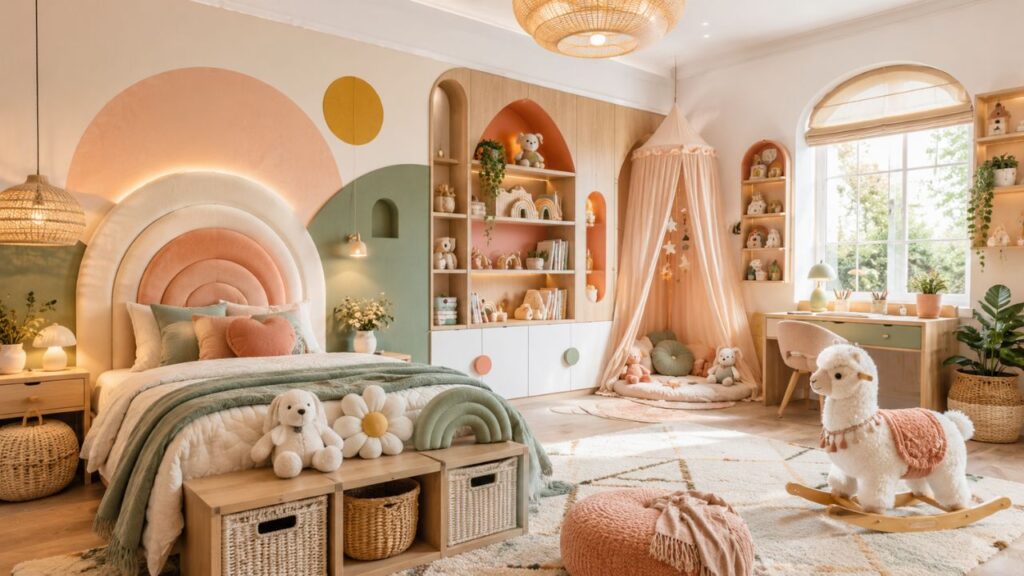
A flexible palette usually includes one main neutral, one supporting color, and one playful accent. For example, warm white walls, sage green storage, and mustard yellow details can feel cheerful but not overwhelming.
Other reliable palettes include:
- Soft blue, cream, and natural wood
- Blush, warm beige, and terracotta
- Olive, ivory, and rust
- Sky blue, white, and navy
- Lavender, pale gray, and warm oak
These kids bedroom ideas feel child-friendly without being too babyish.
Use Themes Carefully
Themes can be lovely, especially when they reflect your child’s interests. Dinosaurs, space, animals, sports, ocean life, woodland stories, and rainbows can all work beautifully.
The trick is to avoid making every item theme-based. Instead of a full dinosaur bed, dinosaur rug, dinosaur curtains, dinosaur lamp, and dinosaur wallpaper, choose one or two main moments.
That keeps the room easier to update. When your child moves from dinosaurs to soccer or science, the entire room doesn’t need to be replaced.
Storage Ideas That Make a Kids Room Easier to Maintain
Storage is where many children’s rooms fall apart. Not because parents don’t try, but because the system is often too complicated for the child.
The best kids room ideas use storage your child can actually use. If a bin is too high, too heavy, or too hard to open, toys will end up on the floor.
Use Open and Closed Storage Together
Open storage works well for books, favorite toys, and display items. Closed storage works better for clutter, extra bedding, seasonal clothes, and toys with many pieces.
A balanced kids room design might include open shelves for books, soft bins for toys, drawers for clothes, and one closed cabinet for messy items.
Labels help, especially for younger children. Use picture labels for toddlers and early readers. Use simple word labels for older kids.
Store by Activity
Instead of organizing only by item type, organize by how your child plays. Keep art supplies near the desk. Keep building blocks near the floor area. Keep bedtime books beside the bed.
This makes cleanup more natural. It also helps children understand where things belong.
In a shared kids bedroom, separate personal storage can prevent arguments. Give each child their own drawer, shelf, basket, or wall hook.
Kids Bedroom Ideas for Study, Reading, and Creativity
As children grow, the room needs to support more than sleep and play. Schoolwork, hobbies, reading, crafts, and quiet time become important.
Good kids bedroom ideas make these activities feel inviting without turning the bedroom into a classroom.
Create a Simple Study Zone
A study zone doesn’t have to be large. A small desk, comfortable chair, task light, and supply drawer can be enough.
Place the desk where distractions are manageable. Some children work well facing a wall. Others feel better near a window. Watch how your child focuses, then adjust.
A practical kids bedroom design also includes a place for backpacks, chargers, papers, and school projects. Otherwise, these items spread across the bed and floor.
Add a Reading Corner
A reading corner can be as simple as a floor cushion, small shelf, and warm lamp. Children are more likely to read when books are visible and easy to reach.
This is one of my favorite kids room ideas because it creates a gentle pause in the room. Even energetic children benefit from a quiet corner that feels separate from active play.
For older children, add a beanbag, wall-mounted lamp, or small lounge chair. For younger children, keep books facing forward so covers catch their attention.
Designing a Shared Kids Bedroom Without Constant Conflict
A shared kids bedroom can be wonderful, but it needs clear boundaries. Children often enjoy being together, yet they still need a sense of ownership.
The design should create fairness. That doesn’t mean everything must match exactly, but each child should feel seen.
Give Each Child Personal Space
Use separate bedding, wall shelves, baskets, corkboards, or small display areas. These small details help each child claim part of the room.
If the room is narrow, beds can sit parallel on opposite walls. If the room is square, an L-shaped layout may open more floor space. Bunk beds can work well, but only when age, ceiling height, and safety make sense.
A thoughtful shared kids room should reduce friction, not create more.
Use Color to Connect the Room
Shared rooms look calmer when the palette connects both sides. Let each child choose an accent color within the same overall scheme.
For example, one side might use blue accents and the other green, while both share white walls, oak furniture, and navy details. This keeps the room cohesive while still feeling personal.
These kids bedroom ideas are especially helpful when siblings have different ages or interests.
Budget-Friendly Kids Room Design That Still Looks Thoughtful
You don’t need a huge budget to create a beautiful room. Some of the most effective changes are paint, layout, lighting, storage, and textiles.
A budget-friendly kids room design starts by keeping the expensive pieces simple. Choose a timeless bed, dresser, and shelves, then add personality through affordable layers.
Spend and Save Wisely
Spend more on items that need to last: mattress, bed frame, dresser, rug, lighting, and storage. Save on items that may change quickly: wall art, bedding, pillows, decals, small decor, and themed accessories.
A flexible kids bedroom grows better over time. You can replace a poster or quilt much more easily than a novelty bed frame.
Paint is one of the most affordable ways to transform a room. A half-painted wall, soft accent wall, painted ceiling, or colorful door can make the room feel designed without requiring expensive furniture.
Reuse What You Already Own
Before buying anything, look at what can be repurposed. A low bookshelf can become toy storage. A dresser can be updated with new knobs. A plain lamp can feel fresh with a new shade.
Many charming kids room ideas come from mixing old and new pieces. A room feels warmer when it doesn’t look like everything came from the same showroom.
This approach also makes the space feel more personal and less disposable.
Designing a Room That Grows With Your Child
Children change quickly. A room designed only for one age may feel outdated within a year.
That’s why long-lasting kids room interior design focuses on flexible foundations. Keep the main furniture, wall colors, and storage adaptable, then change the smaller layers as your child grows.
From Toddler to School Age
A toddler room may need low storage, soft edges, and simple routines. A school-age room needs more books, desk space, hobby storage, and display areas.
Instead of redesigning everything, update the room in stages. Replace toddler art with framed prints. Swap toy bins for craft drawers. Add a study lamp and a larger pinboard.
The best kids bedroom ideas evolve naturally instead of starting from scratch every few years.
From Kid to Tween
Tweens often want more control. Let them choose bedding, art, accent colors, or desk accessories within a palette you can live with.
This teaches decision-making and gives them ownership. It also reduces the chance they’ll reject the whole room because it feels too childish.
A mature kids room design can still feel playful, but it should respect the child’s growing identity.
Common Mistakes to Avoid in Kids Room Interior Design
Even loving parents make mistakes when designing children’s rooms. Most mistakes come from thinking too much about looks and not enough about daily use.
A good room should be easy to clean, safe to move through, comfortable to sleep in, and flexible enough for change.
Buying Everything Too Themed
A strong theme can be fun, but too much of it becomes tiring. Children’s interests change, and heavily themed furniture can become expensive to replace.
Use themes in removable ways. Bedding, art, decals, lamps, cushions, and small accessories are easier to update.
This keeps kids room interior design playful without locking the room into one phase.
Ignoring Lighting
Children need different lighting for different moments. Bright overhead light helps with cleaning and play. Task lighting helps with reading and homework. Soft lighting helps bedtime feel calmer.
A layered lighting plan makes a kids bedroom more useful. It also helps the room shift from active daytime energy to quiet evening rhythm.
Making Storage Too Complicated
If cleanup takes too many steps, children won’t do it consistently. Avoid tiny boxes for broad toy categories or high shelves for everyday items.
Simple bins, visible shelves, and easy labels usually work better. A child-friendly system is better than an adult-perfect system.
Frequently Asked Questions
What is the best age to redesign a child’s room?
Good transition points are around age 2 to 3, 6 to 7, and 10 to 12. These stages often bring new needs, such as a real bed, school storage, homework space, or a more mature style.
How do I decorate a kids room without making it look cluttered?
Limit the color palette, use closed storage for visual clutter, and choose one or two playful focal points. A room can still feel fun with fewer items if the pieces are chosen intentionally.
What colors are best for a toddler bedroom?
Soft greens, warm whites, pale blues, muted yellows, blush tones, and gentle neutrals work well for many toddlers. These shades feel cheerful without being too stimulating at bedtime.
How do I make a kids room feel cozy?
Layer soft textures through rugs, curtains, bedding, pillows, and warm lighting. Cozy rooms also need personal touches like favorite books, framed drawings, family photos, or a small reading corner.
What furniture should every kids bedroom have?
Most children need a safe bed, clothing storage, toy or book storage, good lighting, and a clear surface for reading, drawing, or homework. The exact pieces depend on age, room size, and daily routine.
How can I design a room for a child who changes interests often?
Keep the main furniture and wall colors simple, then use removable decor for interests. Posters, bedding, decals, cushions, and display shelves are easier to change than furniture or wallpaper.
Are bunk beds a good idea for small kids rooms?
Bunk beds can save space, but they’re not right for every child. Consider age, safety, ceiling height, nighttime bathroom trips, and whether both children feel comfortable with the arrangement.
How do I include my child in the design process?
Give controlled choices. Instead of asking them to design the whole room, let them choose between two color palettes, three bedding options, or a few art prints.
Final Thoughts on Creating a Room Your Child Will Love
A child’s room should feel safe, useful, and personal. Beautiful design matters, but the best rooms also support sleep, play, creativity, independence, and growth.
When you plan the layout first, choose flexible furniture, keep storage simple, and add personality in layers, kids room interior design becomes much easier. You’re not just decorating a bedroom. You’re creating a place where your child can rest, imagine, learn, and feel at home.
The most memorable rooms are rarely the most expensive ones. They’re the rooms where every shelf, color, corner, and little detail quietly says, “This space was made for you.”