Introduction
A small bathroom space can either feel calm and private or awkward and cramped. A toilet room may seem like a tiny part of the home, but when it is planned well, it can make the whole bathroom feel more comfortable, organized, and polished.
This matters because the toilet area is one of the most used spaces in any house. A few inches of clearance, better lighting, a quieter fan, or smarter storage can make daily life feel easier.
In many homes, this space is treated as an afterthought. In reality, it deserves careful planning. Privacy, door swing, ventilation, fixture size, wall finish, and storage all affect how the space works.
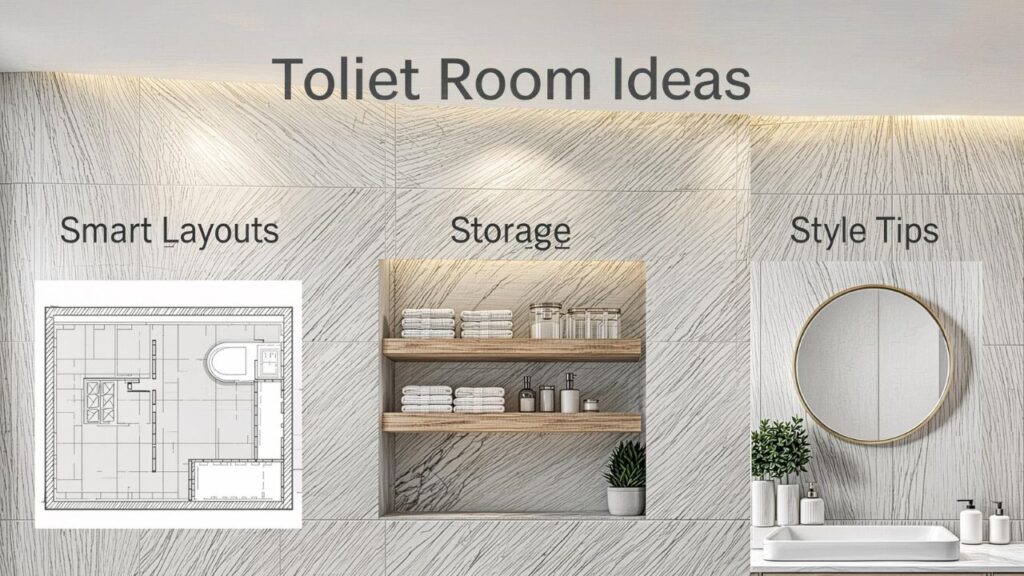
Table of Contents
- What Is a Toilet Room?
- Why Separate Toilet Areas Are Popular
- Best Toilet Room Layout Ideas
- Size, Clearance, and Comfort Planning
- Storage, Lighting, Ventilation, and Materials
- Small Space Design Ideas
- Common Mistakes to Avoid
- Personal Use and Home Value Insight
- FAQ
- Conclusion
What Is a Toilet Room?
A toilet room is a small enclosed or semi-enclosed area designed mainly for the toilet. In many homes, it sits inside a larger bathroom. In others, it may be a separate powder room with a small sink.
Designers often call this space a water closet, WC, toilet compartment, or private toilet area. The purpose is simple: give the toilet its own zone so the rest of the bathroom can stay more open, organized, and comfortable.
This layout is especially useful in shared bathrooms. One person can use the vanity while another has privacy. In a primary bathroom, that separation can make the space feel more peaceful and less exposed.
Why Separate Toilet Areas Are Popular
A separate toilet area has become popular because modern bathrooms are no longer just functional rooms. They are also places for getting ready, relaxing, storing daily products, and creating a little privacy in a busy home.
A private compartment can be useful for:
- Shared primary bathrooms
- Family bathrooms
- Luxury bathroom layouts
- Jack-and-Jill bathrooms
- Guest powder rooms
- Small homes that need better space use
- Aging-in-place bathroom planning
The emotional side is real too. Nobody wants a bathroom that feels uncomfortable or exposed. A door, partial wall, frosted glass panel, or smart layout can make the room feel more thoughtful.
Best Toilet Room Layout Ideas
1. Fully Enclosed Water Closet
A fully enclosed water closet gives the most privacy. It usually has a door, four walls, a toilet, and sometimes a small shelf or cabinet.
This option works best in larger bathrooms where there is enough space for a separate compartment without squeezing the shower or vanity.
A pocket door or outward-swinging door can help save space. The NKBA bath planning guidelines recommend a separate toilet compartment of at least 36 inches by 66 inches with a swing-out or pocket door, while the cited code minimum shown in the guideline is 30 inches by 60 inches.
2. Half-Wall Privacy Layout
A half-wall gives privacy without fully closing the space. This works well when you want separation but still want the bathroom to feel open.
A half-wall can be built beside the toilet, between the vanity and toilet, or between the shower and toilet. It can also hold a niche, shelf, towel hook, or small ledge for decor.
3. Frosted Glass Partition
Frosted glass adds privacy while keeping light moving through the room. It suits modern bathrooms, compact layouts, and spaces that would feel too dark with a full wall.
Use tempered glass and keep cleaning in mind. Smooth glass is easier to maintain than textured surfaces with deep grooves.
4. Toilet Area Behind the Vanity Wall
In some bathrooms, the vanity wall can act as a natural divider. The toilet sits behind or beside the vanity, slightly hidden from the main view.
This is a clever choice when you do not want to build a full enclosure. It makes the layout feel calmer as soon as someone walks in.
5. Hidden Corner Layout
A corner placement can make a bathroom feel more balanced. It works especially well in long bathrooms where the vanity and shower already take up the main sightline.
The goal is not to hide the toilet in a strange leftover spot. It should still have comfortable clearance, good lighting, and easy access.
6. Powder Room Style
If the space includes a sink, it becomes more like a powder room. This is perfect for guests because they do not need to enter the main bathroom.
A powder-style layout can be tiny but still beautiful. Wallpaper, bold paint, a small mirror, and a stylish wall light can turn it into a memorable space.
![Image 2: Infographic showing toilet area planning: side clearance, front clearance, door swing, fan placement, lighting, wall shelf, and storage niche]
Size, Clearance, and Comfort Planning
Good spacing is what separates a comfortable bathroom from an annoying one. Even a beautiful design can feel wrong if knees hit the wall or the door nearly touches the toilet.
Bathroom planning guidelines commonly reference 15 inches from the centerline of the toilet to a side wall or obstruction, at least 21 inches of clearance in front of the toilet, and 30 inches between the centers of adjacent fixtures.
That is the minimum side of planning. For daily comfort, more space often feels better.
| Planning Area | Minimum or Common Guidance | Better Comfort Target |
|---|---|---|
| Side clearance from toilet centerline | 15 inches | 18 inches or more |
| Front clearance | 21 inches | 24–30 inches |
| Separate compartment size | 30 x 60 inches minimum | 36 x 66 inches preferred |
| Door type | Swing, pocket, or outward swing | Pocket or outward swing in tight spaces |
| Shelf depth above toilet | 6–10 inches | Keep shallow to avoid head bumps |
| A compact layout can still work well, but it should not feel like a closet you squeeze into. Before construction, tape the dimensions on the floor. Open the door, pretend to sit, reach for paper, and check whether the layout feels natural. |
Storage, Lighting, Ventilation, and Materials
Storage Ideas
Storage should be useful but not bulky. Since this area is usually small, deep cabinets can make it feel crowded.
Good storage choices include:
- Floating shelf above the toilet
- Recessed wall niche
- Slim wall cabinet
- Basket for extra rolls
- Built-in ledge
- Narrow floor cabinet
- Hidden medicine cabinet nearby
- Over-door hook for cleaning supplies
Avoid storing too many items here. Extra towels, large baskets, and heavy decor can quickly make the space feel cluttered.
Lighting Ideas
Lighting should be soft but clear. A single harsh ceiling light can make a small compartment feel cold.
Better options include:
- Small recessed ceiling light
- Wall sconce
- Motion-sensor night light
- Warm LED strip under a shelf
- Soft pendant in a powder room
Warm white lighting usually feels more comfortable than bright blue-white light. If the space has no window, lighting becomes even more important.
Ventilation Ideas
Ventilation matters because this area can hold odors and moisture. A quiet exhaust fan makes the bathroom feel fresher and more pleasant.
For bathrooms, the International Residential Code section commonly cited for ventilation requires either openable window area or mechanical ventilation in certain bathroom spaces. Local code adoption can vary, so homeowners should confirm requirements with their local building office or contractor.
Material Ideas
Choose surfaces that are easy to clean. Small spaces show dust, splashes, and marks faster than large rooms.
Good materials include:
- Porcelain tile
- Washable paint
- Moisture-resistant wallpaper
- Quartz ledges
- Easy-clean baseboards
- Waterproof luxury vinyl flooring
- Large-format tile with fewer grout lines
Small Space Design Ideas
A small private toilet area can feel stylish if you keep the design intentional. The trick is to give the eye one or two strong details instead of filling every surface.
Use Wallpaper Carefully
Wallpaper can make a tiny space feel special. Try botanical prints, soft stripes, small geometrics, or textured grasscloth-style patterns.
For full bathrooms, choose moisture-friendly wallpaper and use good ventilation. In a powder-style space, you can be bolder because the room is used for shorter periods.
Add Art
One framed print can make the room feel less forgotten. Choose art that suits the bathroom mood: calm, funny, classic, coastal, modern, or vintage.
Paint the Ceiling
A painted ceiling adds personality without taking up space. Soft blue, warm beige, sage green, charcoal, or muted terracotta can all work.
Use a Wall-Mounted Toilet
A wall-mounted toilet can make the floor feel more open. It also gives a sleek modern look. This option usually costs more because the tank and frame sit inside the wall, but it can be helpful in compact bathrooms.
Choose a Compact Toilet
A round-front toilet can save space compared with an elongated model. That said, elongated toilets often feel more comfortable. Measure carefully before choosing.
WaterSense-labeled toilets use 1.28 gallons per flush or less while meeting EPA performance and efficiency criteria, which is about 20% less water than the current federal standard of 1.6 gallons per flush. (US EPA)
Keep the Floor Clear
The more floor you see, the larger the room feels. Use floating shelves, wall hooks, narrow ledges, and recessed niches instead of bulky floor storage.
Design Styles That Work Beautifully
Modern Minimal
A modern minimal look uses simple colors, clean lines, hidden storage, and smooth surfaces. Choose white walls, black hardware, a slim shelf, and a quiet fan.
Warm Neutral
Warm neutral design feels soft and welcoming. Use beige tile, creamy paint, wood accents, woven baskets, and gentle lighting.
Bold Powder Room
A bold powder-style space can handle dramatic wallpaper, dark paint, brass fixtures, and a statement mirror. Since the area is small, bold choices feel charming rather than overwhelming.
Classic Traditional
Traditional design works with wainscoting, vintage art, polished nickel hardware, framed mirrors, and soft wall colors.
Spa-Inspired
For a spa feeling, use natural stone looks, soft lighting, light wood, simple plants, and calming colors. Keep products hidden so the room feels peaceful.
Door, Privacy, and Sound Planning
The door is more important than people think. A door that swings inward can make a tight compartment awkward. A pocket door saves space but needs wall depth and proper installation.
Good door choices include:
- Pocket door for tight rooms
- Outward-swinging door for compact compartments
- Frosted glass door for borrowed light
- Solid-core door for better sound control
- Louvered door only if privacy is less important
Sound control is also part of comfort. Soft materials nearby, a solid door, and a quiet exhaust fan can make the space feel less exposed.
Cleaning and Maintenance Tips
A small toilet area should be easy to clean. If cleaning feels difficult, the design will become annoying over time.
Helpful choices include:
- Smooth wall finishes
- Fewer floor seams
- Easy-access toilet sides
- A removable toilet brush holder
- A small hidden trash bin
- Washable paint
- Simple trim details
- No deep open shelving near the bowl
If you are remodeling, think about where the cleaning tools will live. It is a small detail, but it matters every week.
Common Mistakes to Avoid
The biggest mistake is making the space too tight. Minimum code does not always mean comfortable. A layout can pass basic spacing and still feel unpleasant.
Avoid these mistakes:
- Ignoring door swing
- Placing shelves too low above the toilet
- Forgetting ventilation
- Using dark colors without good lighting
- Choosing a toilet that is too large
- Skipping storage for paper and cleaning items
- Using hard-to-clean textured surfaces
- Blocking access to plumbing
- Forgetting a trash bin
- Making the room feel too plain
Another mistake is treating the space as purely functional. Even a small compartment deserves a nice wall color, good lighting, and a small design detail that makes it feel cared for.
Personal Use and Home Value Insight
There is no celebrity-style personal background or net worth angle for this topic, but there is a real home value angle. Bathroom privacy and function matter to buyers because they affect daily comfort.
A separate or thoughtfully planned toilet room can make a primary bathroom feel more upscale. It can also help shared bathrooms work better for couples or families.
From a financial point of view, spend first on layout, ventilation, lighting, plumbing quality, and durable materials. Those choices matter more than trendy wallpaper or expensive hardware.
That said, small upgrades can make a big difference. A new light, better fan, fresh paint, floating shelf, framed art, or modern toilet seat can make the space feel cleaner without a full remodel.
FAQ
What is a toilet room?
It is a small enclosed or semi-enclosed area designed mainly for the toilet. It may be part of a larger bathroom or a separate small room.
What is the minimum size for a private toilet compartment?
NKBA guidance lists a recommended size of 36 inches by 66 inches, while the referenced code minimum in the guideline is 30 inches by 60 inches. Local codes can vary, so always verify before building.
How much clearance do you need around a toilet?
Common code-based guidance calls for at least 15 inches from the toilet centerline to each side wall or obstruction and at least 21 inches of clear space in front. More space is usually more comfortable.
Is a separate toilet area worth it?
Yes, especially in shared bathrooms. It adds privacy, improves function, and can make a primary bathroom feel more high-end.
Should the door swing in or out?
An outward-swinging door or pocket door is often better in a compact compartment because it keeps the inside easier to use.
What color is best for a small toilet area?
Warm white, soft beige, pale green, muted blue, light gray, and blush tones all work well. Dark colors can look beautiful if the lighting is strong.
Can I use wallpaper in this space?
Yes, especially in powder rooms or well-ventilated bathrooms. Use moisture-resistant wallpaper where humidity is a concern.
What storage works best?
Shallow shelves, recessed niches, slim cabinets, and small baskets work best because they add function without crowding the room.
Does this space need a fan?
Most enclosed bathroom spaces benefit from mechanical ventilation. Requirements depend on local code, room layout, and window access.
What is the best toilet for a small space?
A compact elongated or round-front toilet can work well. Measure the rough-in, bowl projection, side clearance, and front clearance before buying.
Conclusion
A toilet room may be small, but it has a big effect on how a bathroom feels. When the layout, privacy, ventilation, lighting, and storage are planned well, the space becomes easier to use and more pleasant every day.
Focus on comfort before decoration. Get the clearances right, choose easy-clean materials, add quiet ventilation, and keep storage simple. Once those basics are in place, even the smallest private bathroom area can feel calm, stylish, and thoughtfully designed.