
Article
The refrigerator door can only hold so much. Between finger paintings, preschool handprints, school projects, doodles, watercolor experiments, and construction-paper masterpieces, children’s artwork can quickly take over every flat surface in the house. That is why parents often start looking for kids art display ideas that feel special, organized, and realistic for everyday family life.
Displaying your child’s art is about more than decorating a wall. It tells kids their creativity matters. It gives them a sense of pride, ownership, and confidence. At the same time, parents need systems that do not create more clutter, damage walls, or require a full weekend of crafting.
This guide shares practical, beautiful, and budget-friendly ways to display children’s artwork at home, from simple rotating displays to polished gallery walls, playroom installations, digital keepsakes, and storage-friendly solutions for the pieces you cannot keep on the wall forever.
Why Displaying Kids’ Art Matters
Children make art for many reasons. Sometimes they are exploring color. Sometimes they are practicing fine motor skills. Sometimes they are telling a story they cannot fully explain in words yet. When you display that work, you help them see that their ideas have value.
A thoughtful children’s art display can:
- Encourage creativity and confidence
- Make a child’s room, hallway, kitchen, or playroom feel personal
- Turn everyday family spaces into warm, lived-in areas
- Reduce paper piles by giving artwork a clear place to go
- Create a rotating record of your child’s growth
- Start conversations about imagination, effort, and self-expression
The key is choosing a display method that fits your home, your child’s age, your budget, and your tolerance for visual clutter. A minimalist parent may prefer a few framed pieces. A creative family may love a big, colorful kids artwork wall. A renter may need removable, damage-free options. There is no single right answer.
How to Choose the Best Kids Art Display Ideas for Your Home
Before buying frames or hanging clips, think about how your family actually uses your space. The best system is not always the most beautiful one online. It is the one you can maintain.
Consider How Often You Want to Rotate Art
Some kids create new artwork every day. Others bring home a few special projects each month. If your child produces lots of art, a rotating art display will usually work better than permanent frames.
Good rotating options include:
- Clipboards
- Wire and clips
- Curtain rods with rings
- Magnetic strips
- Cork boards
- Art display frames that open from the front
For special pieces you want to keep long-term, use frames, shadow boxes, canvas prints, or photo books.
Think About Your Wall Space
A large hallway can handle a bold kids gallery wall. A small apartment may need a narrow vertical display, a door display, or a digital archive instead.
Look for underused areas such as:
- Hallways
- Stair landings
- Playroom walls
- Kitchen command centers
- Mudrooms
- Bedroom doors
- Closet doors
- The side of a cabinet
- A home office corner
- A laundry room wall
Children’s artwork does not have to be limited to kids’ rooms. In many homes, it looks especially charming in shared family spaces.
Match the Display to Your Decor Style
Kids’ art is naturally colorful and expressive, so the display method can help it blend into your home.
For a clean look, choose:
- Matching frames
- White mats
- Neutral clipboards
- Simple wood rails
- Black or natural wood frames
- A symmetrical grid layout
For a playful look, choose:
- Colorful clips
- Bright washi tape
- Painted pegboards
- Rainbow frames
- Mixed-size displays
- A casual salon-style wall
Neither approach is better. The goal is to create a display that feels intentional rather than accidental.
Keep Safety in Mind
When hanging art in homes with children, use common-sense safety precautions. Heavy frames should be securely anchored. Avoid glass frames in low areas where young kids may bump into them. Keep cords, wires, and small clips out of reach of babies and toddlers. For renters, check lease rules before using nails, anchors, or adhesive products that may affect painted surfaces.
25 Creative Kids Art Display Ideas
Below are practical and stylish ideas for different homes, budgets, and levels of effort. Each one includes what it is, why it works, who it is best for, and any drawbacks to consider.
1. Create a Rotating Clipboard Gallery
A clipboard art display is one of the easiest ways to show off children’s artwork without constantly changing frames. Mount several clipboards in a row or grid, then clip new artwork on top whenever your child brings something home.
This idea works especially well in kitchens, homework areas, playrooms, and hallways. It looks tidy, but it is also flexible. You can use standard letter-size clipboards for school papers or larger artist clipboards for oversized drawings.
Best for families who want a fast, low-cost, easy-to-update system.
Practical tips:
- Use matching clipboards for a cleaner look.
- Hang them evenly with a level.
- Let each child have their own row or column.
- Add small name labels if you have multiple kids.
- Swap artwork weekly or monthly.
Possible drawback: Clipboards have a casual look, so they may not feel polished enough for formal living rooms.
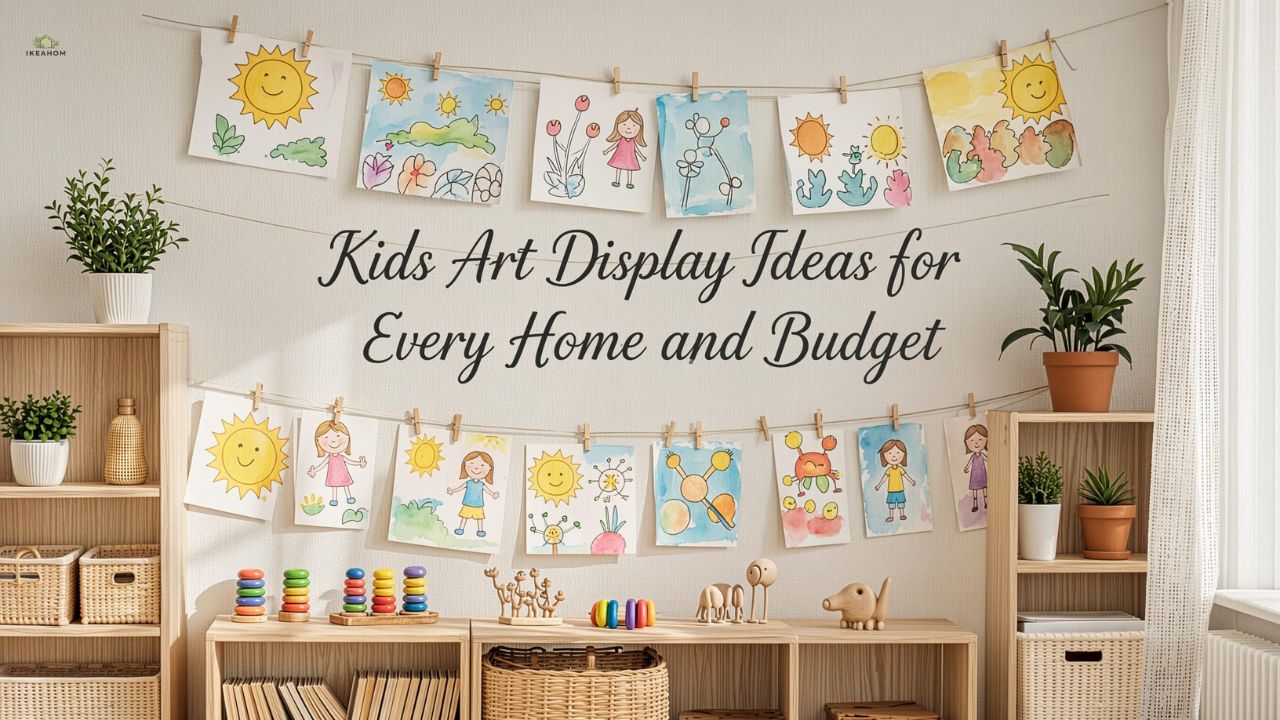
2. Hang a Wire-and-Clip Art Line
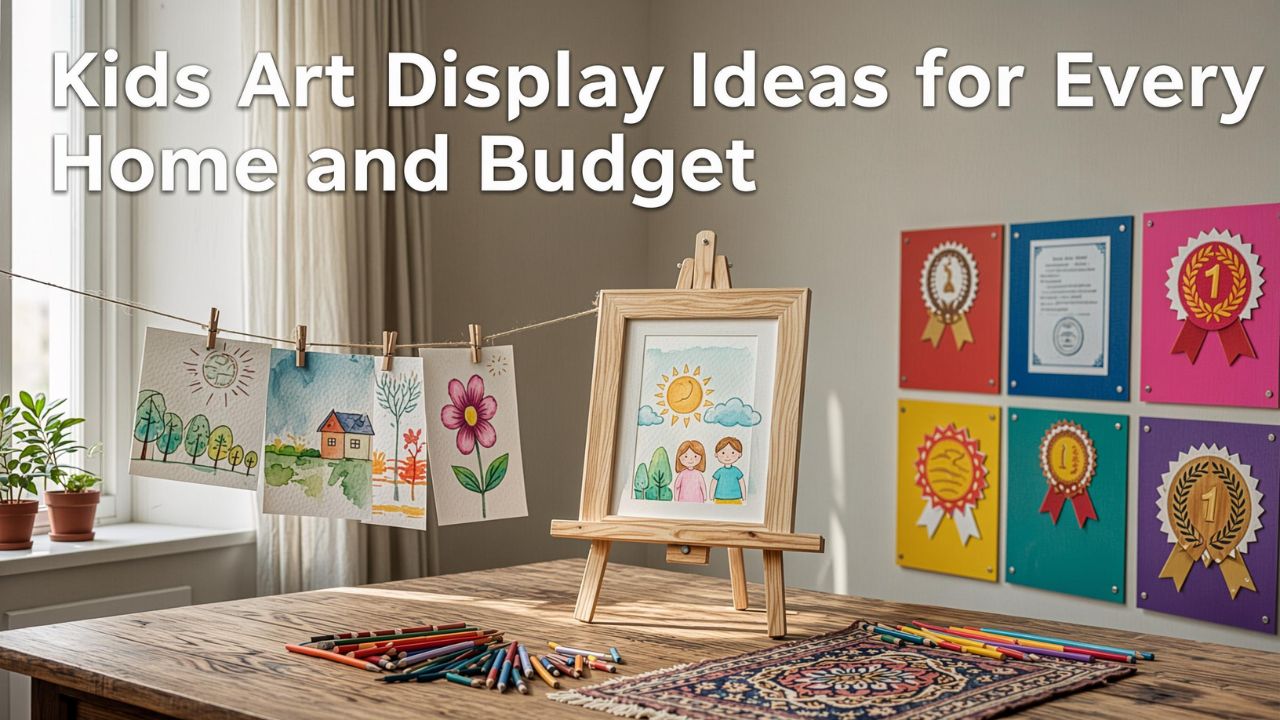
A wire art display uses a thin cable, string, ribbon, or twine stretched across a wall with clips attached. It creates a playful, classroom-inspired look and makes it easy to rotate pieces.
You can install one long line or several stacked rows. This method is great for displaying paintings while they dry, seasonal crafts, school art, and colorful drawings.
Best for playrooms, craft rooms, bedrooms, and family command centers.
Practical tips:
- Use mini clothespins for lightweight paper.
- Choose curtain wire for a more durable setup.
- Keep the line taut so artwork does not sag too much.
- Hang it above child height if you are using small clips.
- Use two rows if your child brings home larger projects.
Possible drawback: It can look messy if too many pieces overlap. Keep the number of displayed items manageable.
3. Use Front-Opening Kids Art Frames
Front-opening frames are designed for easy artwork changes. Instead of removing the frame from the wall, you open the front panel, place the new art inside, and close it again. Many styles can hold several pieces behind the current display, making them useful for short-term storage.
This is one of the best kids art display ideas for parents who want a polished look without committing to one drawing forever.
Best for living rooms, hallways, bedrooms, and grandparents’ homes.
Practical tips:
- Choose frames sized for standard paper, such as 8.5 x 11 inches or 12 x 18 inches.
- Use matching frames for a gallery effect.
- Place one frame per child or per school year.
- Keep the newest art in front and older favorites behind it.
Possible drawback: Front-opening frames typically cost more than basic clip systems, especially if you need several.
4. Build a Mini Gallery Wall
A kids gallery wall turns children’s art into a curated home feature. Mix drawings, paintings, handprints, small canvases, framed photos, and meaningful quotes. The result can feel warm, personal, and surprisingly stylish.
The trick is to use consistent framing or a planned color palette so the wall feels cohesive even when the artwork is varied.
Best for families who want a more permanent display.
Practical tips:
- Lay everything on the floor before hanging.
- Use kraft paper templates to plan frame placement.
- Mix vertical and horizontal frames.
- Add mats to make simple drawings look elevated.
- Leave room to add new pieces over time.
Possible drawback: A gallery wall takes more planning and may be harder to update often.
5. Turn One Wall Into a Kids Art Museum
Create a special area called an “art museum,” “family gallery,” or “creative corner.” Add a small sign, display rails, frames, clips, or shelves. Children love seeing their work treated like real art.
This works beautifully in a hallway, playroom, basement family room, or homeschool area. You can rotate exhibits by season, theme, child, or school year.
Best for families with multiple children or kids who make lots of art.
Practical tips:
- Give the display a name, such as “The Miller Family Gallery.”
- Add a small label under each piece with the child’s name, age, and title.
- Let kids choose which pieces are included.
- Take photos before rotating the display.
- Use removable labels so updates are easy.
Possible drawback: If the area is too large, it can become visually overwhelming. Keep the layout simple.
6. Use Magnetic Poster Hangers
Magnetic poster hangers are wood or metal strips that clamp onto the top and bottom of a paper. They are easy to use, lightweight, and attractive. They work especially well for larger paintings, vertical drawings, and special school projects.
Because the artwork hangs like a poster, it feels more finished than tape or magnets but less formal than a frame.
Best for larger pieces, watercolor paper, and rotating wall displays.
Practical tips:
- Choose natural wood for a warm look.
- Use black or white hangers for modern decor.
- Hang one large piece at a time for impact.
- Use them in bedrooms or reading corners.
Possible drawback: They work best with flat paper, not thick collages or 3D craft projects.
7. Make a Cork Board Art Zone
A cork board display is practical, affordable, and easy to update. Use one large cork board or several smaller tiles to create a dedicated art zone. Cork works well for drawings, certificates, small notes, photos, and school reminders.
This is especially useful if you want a combination of art and organization.
Best for homework stations, kitchens, mudrooms, and craft rooms.
Practical tips:
- Frame the cork board for a more finished look.
- Use colorful pushpins for personality.
- Assign each child their own section.
- Add a small envelope for art labels or notes.
- Rotate older work into a storage bin monthly.
Possible drawback: Pushpins are not ideal within reach of toddlers or very young children.
8. Try a Pegboard Display
A pegboard art display gives you flexibility because you can use hooks, clips, baskets, shelves, and small containers. It can hold flat artwork, craft supplies, scissors, markers, and even small 3D projects.
Pegboards are especially useful in creative spaces because they combine display and storage.
Best for craft rooms, playrooms, homeschool spaces, and art stations.
Practical tips:
- Paint the pegboard to match the room.
- Use baskets for markers, glue sticks, and tape.
- Add clips for finished artwork.
- Use small shelves for clay projects or painted rocks.
- Keep sharp tools out of reach of younger kids.
Possible drawback: Pegboards require more installation than a simple frame or clipboard.
9. Display Art on a Picture Ledge
Picture ledges are shallow shelves that hold frames, canvases, books, and small objects. They are excellent for families who want to display art without making new nail holes every time something changes.
You can layer framed artwork, small canvases, and photos. Ledges also allow for easy seasonal updates.
Best for living rooms, bedrooms, nurseries, and hallways.
Practical tips:
- Use two or three ledges stacked vertically.
- Mix framed drawings with family photos.
- Add small sculptures or clay creations.
- Keep heavier items toward the back.
- Secure ledges properly into studs or anchors.
Possible drawback: Ledges collect dust and may not be safe in narrow walkways if installed too low.
10. Use Washi Tape for a Colorful Temporary Display
Washi tape is a favorite for DIY kids art display projects because it is colorful, inexpensive, and usually easier to remove than standard tape. You can tape artwork directly to the wall or create faux frames around each piece.
This option is perfect for renters, temporary displays, birthday parties, seasonal art, and kids who like to help decorate.
Best for budget-friendly, flexible displays.
Practical tips:
- Test tape on a hidden area first.
- Use tape to create borders around drawings.
- Change tape colors by season.
- Let kids design their own frame patterns.
- Avoid using it on delicate or freshly painted walls.
Possible drawback: Adhesive products can still affect some paint finishes, especially if left up for a long time.
11. Make a Door Gallery
Doors are often overlooked display spaces. Bedroom doors, closet doors, pantry doors, and playroom doors can become compact art galleries without taking up wall space.
This is a great solution for small homes or apartments where wall space is limited.
Best for bedrooms, closets, apartments, and shared kids’ rooms.
Practical tips:
- Use removable adhesive strips, magnets on metal doors, or over-the-door hanging systems.
- Keep the display lightweight.
- Create a “new this week” section.
- Use the inside of a closet door for a less visible keepsake area.
Possible drawback: Art can get bumped, wrinkled, or torn if the door is used heavily.
12. Frame One Piece From Each Year
Instead of trying to display everything, choose one favorite piece from each year and frame it. Over time, you create a visual timeline of your child’s growth.
This is a meaningful approach for parents who want a sentimental but uncluttered display. It also works well as a hallway timeline or bedroom gallery.
Best for long-term keepsake displays.
Practical tips:
- Write the child’s age and year on the back.
- Choose pieces that show personality, not just technical skill.
- Use the same frame style each year.
- Add one new frame annually.
- Photograph the child holding the artwork before framing it.
Possible drawback: It requires editing. You will need to choose favorites and let other pieces go.
13. Create a Digital Art Frame Slideshow
A digital frame can show photos of your child’s artwork without requiring physical storage or wall space. Take clear photos or scans of artwork, then upload them to a digital frame. This is a smart option for grandparents, small spaces, and families who want to preserve lots of art.
Best for people who want less paper clutter.
Practical tips:
- Photograph art in natural light.
- Crop out the floor or table.
- Organize images by child and year.
- Add captions if your frame supports them.
- Back up files in cloud storage or an external drive.
Possible drawback: The tactile charm of the original art is lost, so keep a few physical favorites too.
14. Turn Artwork Into a Photo Book
A kids art keepsake book is a wonderful way to preserve many pieces without storing boxes of paper. At the end of the school year, photograph or scan your child’s best work and create a printed book.
You can organize it by age, grade, season, or theme. Add captions with your child’s quotes about each piece for extra personality.
Best for long-term memory keeping and clutter reduction.
Practical tips:
- Create one book per school year.
- Include photos of 3D crafts too.
- Add a title page with your child’s age and grade.
- Let your child choose some of the featured pieces.
- Keep the original only if it is especially meaningful.
Possible drawback: Photo books take time to create and may involve printing costs.
15. Use a Hanging Pants Hanger or Skirt Hanger
Wooden clip hangers are a clever, low-cost way to display art. Clip a drawing into the hanger and hang it from a hook, peg rail, or wall knob. This gives artwork a relaxed, studio-like look.
Best for quick displays, bedrooms, and casual creative spaces.
Practical tips:
- Use wooden hangers for a warmer look.
- Hang several in a row.
- Use removable wall hooks if you rent.
- Rotate pieces often.
- Add the child’s name with a small tag.
Possible drawback: This method works better for single sheets than thick crafts.
16. Create a Seasonal Art Display
Seasonal displays help you manage the flow of artwork. Instead of keeping everything up indefinitely, rotate pieces based on the time of year.
Examples include:
- Snowflakes and winter paintings in January
- Hearts and handmade cards in February
- Flowers and rainbows in spring
- Ocean scenes in summer
- Leaves, pumpkins, and warm colors in fall
- Holiday crafts in December
Best for families who like decorating throughout the year.
Practical tips:
- Store seasonal favorites in labeled folders.
- Reuse a wire, cork board, or frame system.
- Let kids help curate the display.
- Keep the display small so it feels fresh.
Possible drawback: Seasonal storage can pile up if you do not edit regularly.
17. Make an Art Display Ladder
A leaning blanket ladder or wall-mounted ladder can become a creative vertical art display. Use clips, ribbon, or small hangers to attach artwork to the rungs.
This adds texture and height to a room and works especially well in playrooms or cozy reading areas.
Best for homes with a farmhouse, boho, or casual decor style.
Practical tips:
- Secure leaning ladders to the wall for safety.
- Use lightweight paper only.
- Add small baskets for rolled artwork.
- Keep it away from climbing toddlers.
- Rotate pieces by color or theme.
Possible drawback: It takes up floor space and may not be suitable for very young children unless secured.
18. Display Art on a Rail System
A rail system uses a strip of wood, metal, or molding with clips or hooks attached. It is sturdier than string and more polished than tape. You can make a DIY version with a wood board and binder clips or buy a ready-made art rail.
Best for high-traffic areas where a durable display is needed.
Practical tips:
- Paint the rail to match your wall.
- Use strong clips for thicker paper.
- Install at adult eye level for a cleaner look.
- Add several rails for siblings.
- Label each rail by child or theme.
Possible drawback: Installation may require screws and wall anchors.
19. Use Binder Clips on a Wood Board
This is a simple DIY kids art display that looks intentional but costs very little. Attach binder clips to a painted or stained wood board, then mount the board on the wall. The clips hold art securely and make swapping easy.
Best for families who like simple DIY projects.
Practical tips:
- Use a board that fits your available wall space.
- Space clips evenly.
- Choose black clips for contrast or metallic clips for a cleaner look.
- Add a title such as “Look What I Made.”
- Sand rough wood edges before installing.
Possible drawback: It still requires basic tools and installation.
20. Create a Magnetic Display Wall
A magnetic wall can be made with a metal board, magnetic whiteboard, magnetic paint, or a large sheet of galvanized metal. Use magnets to attach artwork and rotate it easily.
This is a flexible option for families who want art, notes, calendars, and school papers in one place.
Best for kitchens, command centers, and homeschool areas.
Practical tips:
- Use strong magnets for thicker paper.
- Avoid tiny magnets around young children.
- Frame a metal sheet for a polished look.
- Keep the display edited so it does not become a paper dump.
- Use sections for art, reminders, and school forms.
Possible drawback: Magnetic paint may require several coats and may not hold heavy items well.
21. Turn Art Into Functional Home Items
Some artwork deserves to become part of everyday life. You can print or transfer children’s drawings onto items such as mugs, pillows, tote bags, calendars, cards, wrapping paper, or ornaments.
This is a sweet gift idea for grandparents and relatives. It also helps preserve art in a way that does not require more wall space.
Best for gifts and keepsakes.
Practical tips:
- Choose bold, high-contrast artwork for printing.
- Scan art at a high resolution if possible.
- Use one drawing per item for a clean result.
- Turn holiday art into cards or gift tags.
- Keep expectations realistic; colors may print slightly differently.
Possible drawback: Custom printed items cost money and may not be practical for every piece.
22. Use Shadow Boxes for 3D Projects
Not all children’s art is flat. Clay animals, paper flowers, handprint crafts, medals, mixed-media collages, and small sculptures can be displayed in shadow boxes.
A shadow box display protects dimensional pieces and makes them feel special.
Best for milestone projects, handprint keepsakes, and sentimental crafts.
Practical tips:
- Choose deep frames for bulky items.
- Use acid-free backing for keepsake pieces when possible.
- Add a label with the date and child’s age.
- Display only the most meaningful 3D projects.
- Avoid overcrowding the box.
Possible drawback: Shadow boxes are bulkier and more expensive than standard frames.
23. Make a Rotating “Artist of the Week” Display
If you have multiple children or a classroom-like homeschool setup, an “artist of the week” display can make each child feel celebrated. Feature a few pieces from one child at a time, then rotate.
Best for families with siblings, homeschool rooms, and playrooms.
Practical tips:
- Let the featured child choose the artwork.
- Add a small photo of the artist.
- Include a short artist statement, such as “I made this because…”
- Rotate weekly or monthly.
- Keep the tone encouraging rather than competitive.
Possible drawback: Siblings may compare displays, so keep it positive and balanced.
24. Create a Keepsake Box for Rotated Artwork
A display system works best when paired with a storage system. When art comes down, decide whether to recycle it, photograph it, gift it, or keep it.
A kids art storage box helps preserve special pieces without letting every paper become permanent clutter.
Best for parents who feel guilty throwing away artwork.
Practical tips:
- Use one box or portfolio per child.
- Label folders by year or grade.
- Keep only the strongest or most meaningful pieces.
- Take photos of bulky projects before letting them go.
- Review the box once or twice a year.
Possible drawback: Storage boxes can still overflow if you do not set limits.
25. Mail Artwork to Family
One of the most meaningful ways to display children’s artwork is to share it. Grandparents, aunts, uncles, cousins, and close friends often love receiving handmade art in the mail.
This turns extra drawings into connection rather than clutter.
Best for families with faraway relatives.
Practical tips:
- Keep a mailing folder for extra art.
- Let your child choose who receives each piece.
- Add a short note from the child.
- Use larger envelopes for delicate projects.
- Photograph special pieces before mailing them.
Possible drawback: You will not keep the original, so only send pieces you are comfortable parting with.
Comparison Table: Which Art Display Method Is Right for You?
| Display Idea | Best For | Cost Level | Easy to Rotate? | Best Room |
|---|---|---|---|---|
| Clipboards | Everyday school art | Low | Yes | Kitchen, hallway, playroom |
| Wire and clips | Frequent new artwork | Low | Yes | Playroom, craft room |
| Front-opening frames | Polished displays | Medium | Yes | Hallway, living room |
| Gallery wall | Long-term favorites | Medium to high | Sometimes | Hallway, family room |
| Cork board | Art plus organization | Low to medium | Yes | Homework area, mudroom |
| Pegboard | Art and supplies | Medium | Yes | Craft room, playroom |
| Picture ledges | Framed art and objects | Medium | Yes | Bedroom, living room |
| Washi tape | Temporary displays | Low | Yes | Bedroom, rental home |
| Digital frame | Small spaces | Medium | Yes | Any room |
| Photo book | Keepsake storage | Medium | No wall needed | Shelf or coffee table |
| Shadow box | 3D projects | Medium to high | No | Bedroom, hallway |
| Keepsake box | Long-term storage | Low to medium | Not a display | Closet or storage area |
How to Create a Kids Art Display That Looks Intentional
A successful kids art wall does not need to be expensive. It simply needs a little structure. Without structure, even beautiful artwork can look like clutter. With structure, scribbles, handprints, and school projects can become meaningful home decor.
Choose a Display Zone
Start by choosing one main area. This gives artwork a home and keeps it from spreading across the entire house.
Good display zones include:
- A hallway wall
- A breakfast nook
- A playroom corner
- A bedroom wall
- A stairway landing
- A craft table area
- A family command center
The display zone should be easy to see but not in a spot where papers will constantly get bumped or damaged.
Limit the Number of Pieces
A display feels more special when it is edited. Instead of hanging 40 pieces at once, choose 5 to 12 depending on the size of your wall.
For larger families, give each child a set number of display spots. For example, each child gets three clipboards or two frames. This makes the system fair and manageable.
Use Repetition
Repetition makes a display feel designed. You can repeat:
- Frame color
- Clip style
- Paper size
- Mat color
- Spacing
- Label format
- Display height
Even if the art itself is colorful and varied, repeated display elements create visual calm.
Add Labels
Small labels make a children’s artwork display feel like a real gallery. You can include:
- Child’s name
- Age or grade
- Title of the artwork
- Date
- Medium, such as watercolor, crayon, or collage
- A short quote from the child
Labels are especially sweet for younger children because their explanations are often just as memorable as the art.
Rotate on a Schedule
A rotating system prevents piles from building up. Choose a rhythm that feels realistic.
You might rotate art:
- Every Friday
- Once a month
- At the end of each season
- After each school unit
- Before birthdays or holidays
- At the end of the school year
When new art comes in, avoid adding it automatically. Instead, choose what comes down first.
Budget-Friendly Kids Art Display Ideas
You do not need custom framing or expensive supplies to create a lovely display. Many of the best ideas use items you may already have at home.
Under $10 Ideas
Try these low-cost options:
- Washi tape frames
- Twine and clothespins
- Binder clips on pushpins
- Magnetic clips on the refrigerator
- Repurposed hangers
- A cardboard “gallery” sign
- Reused frames from thrift stores
For a quick weekend project, hang a piece of twine between two removable hooks and clip up five favorite drawings. It takes minutes and instantly gives artwork a place to belong.
Under $25 Ideas
With a slightly larger budget, consider:
- Matching clipboards
- A cork board
- A small picture ledge
- Poster hangers
- A framed metal sheet
- A set of simple frames
- A wall-mounted rail with clips
These options can look polished while still staying affordable.
When to Spend More
It may be worth spending more on:
- Front-opening frames for frequently changed artwork
- Large picture ledges for a shared family space
- High-quality frames for long-term keepsakes
- Photo books at the end of each school year
- Shadow boxes for sentimental 3D pieces
Spend more only on systems you know you will use. A simple clipboard wall that gets updated often is more valuable than expensive frames that sit empty.
Renter-Friendly and Damage-Free Display Options
If you rent your home or do not want to make holes in the wall, choose removable or freestanding solutions. Always test adhesives first because paint finishes vary.
Good renter-friendly options include:
- Washi tape
- Removable adhesive hooks
- Over-the-door displays
- Freestanding easels
- Magnetic displays on metal doors
- Clipboards hung with removable strips
- Art displayed on bookshelves
- Leaning frames on picture ledges or furniture
A door gallery is especially useful in apartments. You can display several pieces on the inside of a bedroom or closet door without using valuable wall space.
Small-Space Ideas for Apartments and Shared Rooms
Small homes need smart editing. Instead of expanding the display area, make the display more flexible.
Try these kids art display ideas for limited space:
- Use one front-opening frame per child.
- Create a vertical clipboard row behind a door.
- Photograph artwork and use a digital frame.
- Make one annual photo book.
- Use a small cork board as a rotating display.
- Add a picture ledge above a desk.
- Store favorites in a slim portfolio under a bed.
In small spaces, the goal is not to display everything. The goal is to celebrate creativity without overwhelming the room.
What to Do With Artwork You Do Not Display
One of the hardest parts of managing kids’ art is deciding what to keep. Many parents feel guilty recycling artwork, especially when a child is proud of it. But keeping every paper can quickly become impossible.
A simple sorting system helps.
Use the Four-Part Sort
When artwork comes home, sort it into four categories:
- Display now
- Save as a keepsake
- Photograph and recycle
- Gift or mail to someone
This keeps decisions simple and prevents piles from becoming emotional clutter.
Keep the Most Meaningful Pieces
You do not need to save every worksheet or scribble. Consider keeping pieces that show:
- A milestone, such as a first drawing of a person
- A unique story or idea
- A special handprint or footprint
- A project connected to an important memory
- Strong effort or improvement
- A funny or meaningful quote
- A favorite subject your child loved at that age
Write the date and child’s age on the back before storing it.
Involve Your Child
Children can help choose what gets displayed and what gets saved. This teaches decision-making and helps them feel respected.
Try asking:
- “Which one are you most proud of?”
- “Which one should we hang this week?”
- “Do you want to keep this, gift it, or take a picture of it?”
- “What title should we give this piece?”
Avoid asking too many questions about every paper. Keep the process light.
Common Mistakes to Avoid
Even a simple art display can become frustrating if the system does not fit your home. Watch out for these common mistakes.
Trying to Display Everything
When everything is displayed, nothing feels special. Choose favorites and rotate regularly. Your child’s creativity can be honored without every piece staying up forever.
Using Permanent Methods for Temporary Art
Tape, glue, and nails may not be worth it for artwork that changes weekly. Use clips, frames that open, ledges, or boards for temporary pieces.
Hanging Heavy Frames Too Low
Young children may pull, bump, or lean on frames. Use lightweight options at kid height and reserve heavier frames for higher wall areas with secure installation.
Forgetting to Date the Artwork
Dates matter later. A drawing may feel ordinary now, but in five years, you will want to know whether your child made it at age 3, 5, or 8.
Letting Storage Become a Dumping Ground
A keepsake box should not become a guilt box. Set limits. One portfolio or box per child is often enough for the most meaningful pieces.
Expert-Style Tips for a Better Children’s Art Display
Small details can make a display feel more thoughtful and easier to maintain.
Use Mats to Elevate Simple Drawings
A basic crayon drawing can look beautiful in a white mat and simple frame. Mats create breathing room and help colorful art feel more intentional.
Group Art by Color
If you want a calmer look, group pieces with similar colors. For example, display blue and green paintings together in a bathroom or warm red and orange art in a playroom.
Mix Art With Photos
A wall of only paper can feel busy. Mix in photos of your child painting, holding artwork, or working at the craft table. This tells a fuller story.
Preserve Oversized Art Creatively
Large paper can be hard to store. Photograph it, crop it, and print it smaller. You can also cut a favorite section and frame that portion as abstract art.
Create a “Coming Soon” Folder
Keep a folder near your display area for new art waiting to be hung. This prevents papers from spreading across counters and gives you time to choose.
Safety and Maintenance Considerations
Most art displays are simple, but a few safety and maintenance details matter, especially in homes with babies, toddlers, pets, or high-traffic areas.
Use secure hardware for anything heavy. Avoid glass in low frames if a child may bump into it. Keep tiny magnets, pushpins, and small clips away from children who may put objects in their mouths. If you use adhesive strips, follow the product directions carefully and check them occasionally.
For maintenance, dust frames and ledges regularly. Replace curled or faded paper. Keep artwork away from humid areas, direct sunlight, and cooking splatter if you want it to last. If a piece is especially meaningful, store it flat in a dry place or scan it before displaying.
A Simple Step-by-Step Plan to Start This Weekend
If you feel overwhelmed, start small. You do not need to organize every piece of art your child has ever made.
Step 1: Choose One Display Area
Pick a wall, door, shelf, or board. Keep it manageable.
Step 2: Choose One Display Method
Start with clipboards, wire and clips, a cork board, or front-opening frames. Choose something easy to update.
Step 3: Select 5 to 10 Pieces
Choose recent favorites. Do not overthink it.
Step 4: Add Dates and Names
Write on the back or add a small label.
Step 5: Create a Rotation Folder
Place incoming art in a folder. Once a week or once a month, choose what to display next.
Step 6: Decide What Happens When Art Comes Down
Use the four-part sort: display, save, photograph, or gift.
This simple system turns a pile of paper into a meaningful family ritual.
FAQ
How do I display kids’ art without making the house look cluttered?
Choose one dedicated display area and limit the number of pieces shown at one time. Matching frames, clipboards, or a consistent layout can make colorful artwork feel intentional instead of messy.
What is the easiest way to rotate children’s artwork?
Clipboards, wire with clips, cork boards, magnetic boards, and front-opening frames are the easiest options. They let you swap artwork quickly without removing hardware or changing the whole display.
How many pieces of kids’ art should I keep?
There is no perfect number, but many families do well with one keepsake box or portfolio per child. Keep milestone pieces, especially meaningful projects, and artwork that shows your child’s personality or growth.
What can I do with oversized school art?
Photograph or scan it, then print a smaller version. You can also frame a favorite section, roll it in a mailing tube, or store it in a large portfolio if it is especially meaningful.
Are glass frames safe for kids’ rooms?
Glass frames may not be ideal in low areas or active play spaces. Acrylic, lightweight frames, poster hangers, clipboards, and cork boards are often more practical for children’s rooms and playrooms.
How can I display 3D kids’ crafts?
Use shadow boxes, picture ledges, shelves, cubbies, or clear display containers. For bulky projects you cannot keep, take photos from a few angles before recycling or gifting them.
What should I do if my child wants to keep every drawing?
Create limits in a gentle way. Give your child a folder, box, or portfolio and explain that they can choose favorites to save. Let them photograph or mail some pieces so letting go feels easier.
Can kids help design their own art display?
Yes. Children can choose favorite pieces, name the gallery, make labels, decorate frames, or decide what gets rotated. Involving them makes the display more meaningful and teaches pride in their creative work.
Conclusion
The best children’s art displays are not about perfection. They are about creating a home where creativity is noticed, celebrated, and managed in a way that works for real family life.
Whether you choose a polished gallery wall, a simple row of clipboards, a playful wire-and-clip system, a digital frame, or a yearly keepsake book, the right approach should make your child feel proud without making your home feel overwhelmed.
Start with one small display area, choose a method you can update easily, and give yourself permission to keep only the pieces that truly matter. Your child’s art does not need to cover every wall to be meaningful. Sometimes, one carefully chosen drawing in the right place says everything.